Inspiration Board
Storyboard
Shot Intent
Blockout
Camera Path
Material Pass
Automobile Finish
Lighting
Lumen Readability
Final Render
Cinematic Output
From intent to fidelity: each phase refines the GT-R’s surfaces, motion language, and Unreal-native realism.
The Core: Automobile Materials
Interactive Split-Screen
Before
After
Material System Notes
Shading Model: Default Lit (UE5)Detail Strategy: micro-normal + packed masksFinish Goal: highlight flow under motionDebug: roughness + metalness separation
The “After” pass tightens the metallic response and preserves readability across harsh reflections.
The Core: Camera Shake Scripting
Blueprint Visualization
CameraShake Graph (Stylized)
Scripting Specs
Logic: curve-driven amplitude + time-based dampingStability: seeded noise to avoid “camera jitter”Control: clamp to preserve cinematic framingOutput: consistent shake beats synced to takes
The shake behavior is tuned for cinematic readability: motion feels alive, but the composition stays deliberate.
The Core: Audio-Visual Clip Synchronization
Waveform Reactivity
Clip Synchronization
BPM 120 • Beat 1
Post-Production Breakdown
BPM Target: 120 (music reference)Sync Method: clip timing + engine time alignmentHighlight: beat envelope drives shake intensityDelivery: cinematic LUT + grain pass
As you scroll, the waveform updates to show how beat timing locks the motion and edit rhythm.
Process (Bento Box)
Modeling
Surface fidelity for metallic response, micro-detail preservation, and camera-friendly topology.
Look Dev
Material passes tuned for specular stability and cinematic roughness behavior.
Scripting
Camera shake parameters authored as curve-driven logic for repeatable takes.
Audio-Visual Sync
Beat-locked cues align motion intensity with musical BPM for an edit that feels intentional.
Lighting
Lumen tuning for readable highlights, shadow depth, and stable reflections.
Post-Production
Color grading, grain shaping, and final compositing to deliver a premium cinematic finish.
Inspiration Board Breakdown
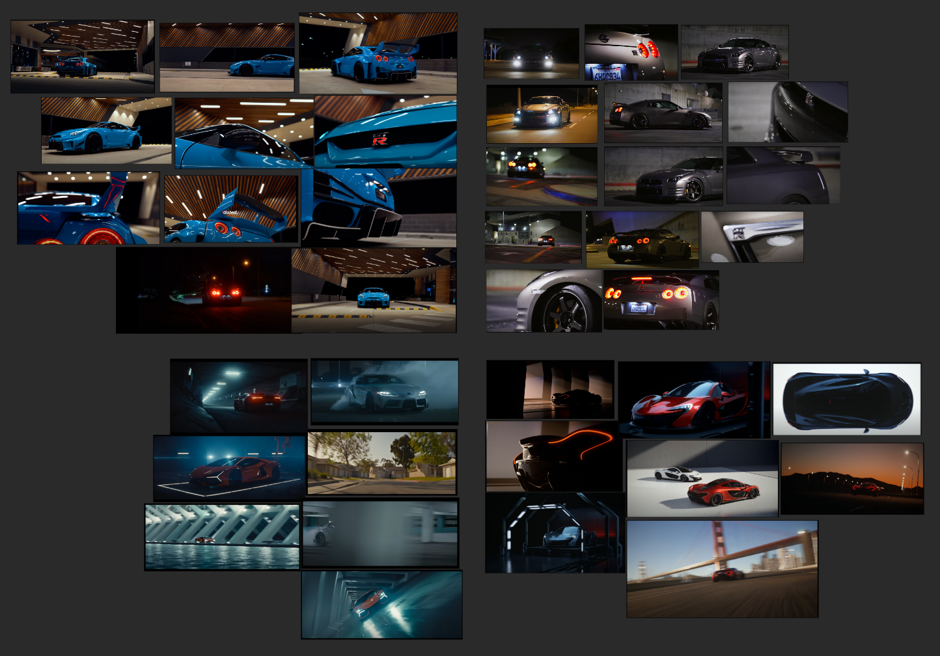
Intent
This section explains visual direction: composition references, color intent, and target material mood before production execution.
Bridge Universe Scene Breakdown
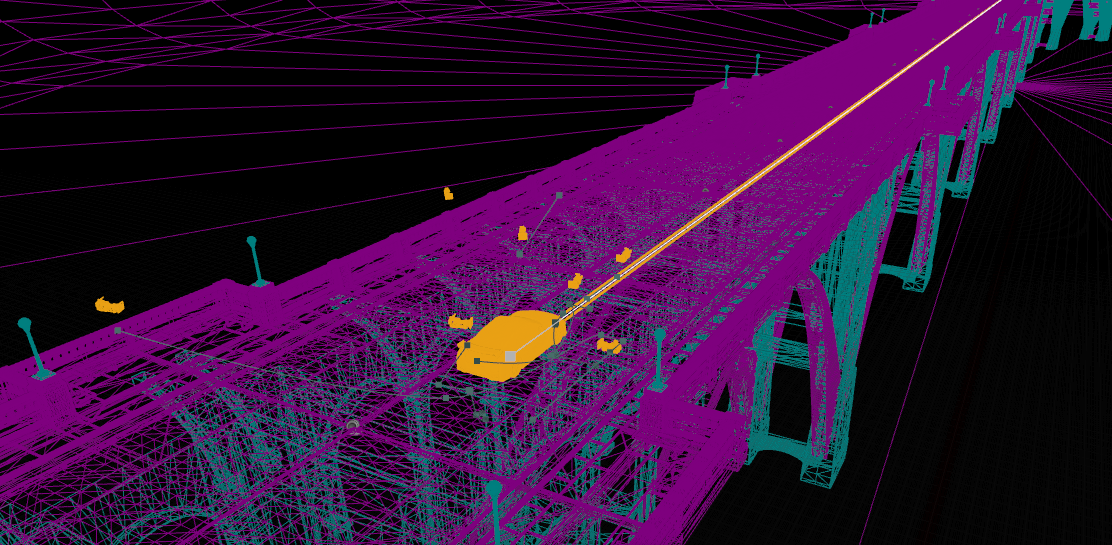
Environment
This section details environment staging, depth layering, and how the bridge shot supports speed perception and silhouette readability.
200+ BGM Timeline Breakdown
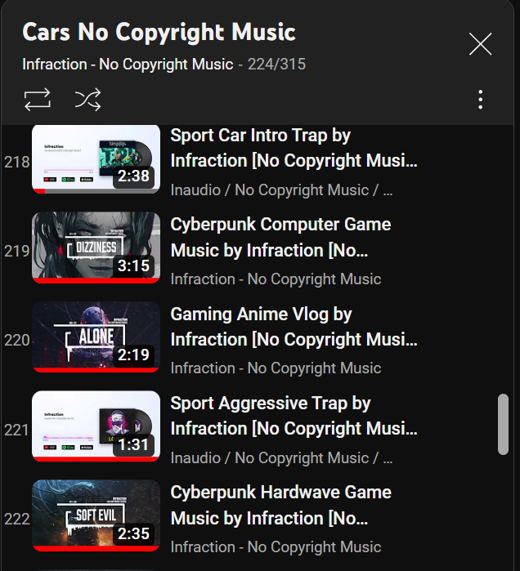
Audio Timing
This section describes music pacing decisions and how beat progression informs camera tempo and motion transitions across the edit.
Clip Synchronization Breakdown
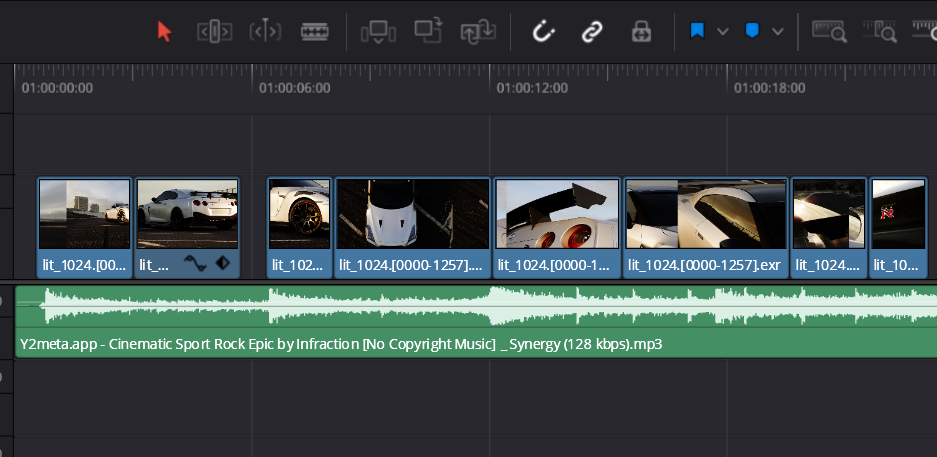
Synchronization Logic
This section explains the cue mapping strategy that aligns shot cuts, camera shake intensity, and waveform peaks for consistent cinematic rhythm.